

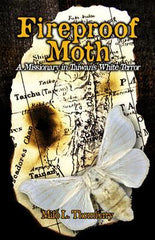
Fireproof Moth
Milo L Thornberry
Non-Fiction
by Milo L Thornberry Fireproof Moth is a mystery worthy of fiction. That the memoir is true makes it hard to put down or to forget. When convinced that the secret police...
12 In Stock
9781934597323
Fireproof Moth is a mystery worthy of fiction. That the memoir is true makes it hard to put down or to forget. When convinced that the secret police were going to arrange an “accident” to kill his friend, the missionary decided he had no choice but to help well known human rights leader Peng Ming-min escape from Taiwan. So successful was the getaway that when President Richard Nixon and Chinese Premier Chou En-lai met in Beijing two years later and wanted to know how Peng got out, neither of their vast intelligence systems could tell them. Even Generalissimo Chiang Kai-shek, who presided over Taiwan’s Stalinist-style police state, went to his grave without knowing that a group of non-government novices managed to get Peng out undetected.
Milo Thornberry believed God called him to be a missionary to teach history and live the faith he professed. Taiwan wasn’t his choice, but it was where the Methodist Church sent him at the end of 1965. "Fireproof Moth: A Missionary in Taiwan’s White Terror" is a 65,000-word account of how becoming friends with Peng led to a double life, one in which Milo taught church history at Presbyterian seminaries, and the other in which he and his wife secretly collaborated with Peng and two of his former students in a variety of human rights activities, all of which were illegal and some of which were considered capital crimes under martial law. The constant threat of discovery by Chiang’s secret police gave Milo his own taste of the White Terror. When police showed up at their door on March 3, 1971, Milo and his wife became the first missionaries arrested since the Nationalists took over the island in 1945. Although the Kuomintang leaked a panoply of charges to explain the arrest and deportation, Peng’s escape and the Thornberry’s other activities were not among them. Instead, officials in Taiwan reported them as terrorists. The line in Beijing was that they were CIA agents.
Although Thornberry did not suffer torture and imprisonment like Wei Ting-chao and Hsieh Tsung-min, nor Peng’s twenty-year exile from his homeland, Milo was blacklisted by the U.S. State Department and denied a passport for nineteen years. Not allowed to resume his vocation as a missionary outside the United States, he completed his doctorate at Boston University, trained missionaries, and served as a pastor in Alaska and Oregon. His role in Peng’s escape was not revealed until 2003 when Milo was invited back to the newly democratic Taiwan to be recognized for his human rights activities. Only in 2009 did he and Peng uncover the true reason for Milo’s arrest thirty-eight years earlier. As a personal story, Milo’s conflicts of conscience between ideals of justice, breaking the law, and being a guest in the country were not theoretical questions, but the daily cauldron in which he made his fateful decisions. As a political narrative, the author’s portrayal of life in the White Terror casts an eerie shadow on contemporary relations between the United States, China, and Taiwan.
REVIEW:
Fireproof Moth is an autobiographical account of a Methodist missionary’s stay in Taiwan in the late 1960s, but it reads like a thriller. Thornberry first describes his personal journey to becoming a minister in the mid 1950s and the pursuit of spirituality that led him into life as a missionary. In 1965, the Methodist Church decided to send Thornberry and his wife Judith to Taiwan, and the couple went through preparatory sessions at Drew University and Stony Point Missionary Orientation Center north of New York. During this time, he did read some critical works such as George Kerr’s Formosa Betrayed and Mark Mancall’s Formosa Today, which had just been published at the time. Upon arrival in Taipei on New Year’s Eve 1966, they settled down, started language school, and gradually came to experience the suffocating hold which the Kuomintang regime of Chiang Kai-shek had on society in Taiwan. They also got to know Prof. Peng Ming-min, who was under house arrest at the time for publishing a document titled “A Manifesto for Self-Salvation” in 1964. Gradually, they became more immersed in life in Taiwan, continued language training, and learned about the lack of political freedoms and human rights on the island. They also started to help channel support from overseas to families of political prisoners, with the help of Peng’s two courageous students, Hsieh Tsung-ming and Wei Ting-chao. They also started to produce mimeographed information sheets to inform visiting friends and colleagues overseas about the repressive political atmosphere in the island. Together with other foreign friends in Taiwan they approached American and European reporters, gave them background information on developments in Taiwan, which would then be published in the news media. Fox Butterfield and the New York Times and Selig Harrison of the Washington Post were among them. When in September 1968 Professor Peng Ming-min told them that he had received indications from the Investigation Bureau of the Ministry of Justice, one of the main secret police organizations at the time, that Peng might have an “accident”, a plan was devised to smuggle Peng out of Taiwan. After more than a year of preparation, the plan became a reality, and on 3 January 1970, Peng left Taiwan on a doctored Japanese passport, disguised as a Japanese musician. He safely made it to Sweden, where he received political asylum. Eventually, Peng made it to the United States, where he became a senior research scholar and visiting professor at the University of Michigan. Oddly, the Kuomintang authorities never discovered the role played by Thornberry and his wife in Peng’s escape. They surmised that he had been helped by the CIA. The matter even came up in the February 1972 discussions between Kissinger and Nixon with Chinese Premier Chou Enlai. Chou accused the Americans of aiding Professor Peng in his escape, but Nixon responded with “We had nothing to do with it.” However, Taiwan’s secret police agencies kept an ever-tightening watch over Milo and Judith, and on 2 March 1971 – more than a year after Peng’s escape – they were arrested and expelled from Taiwan. A witness who came to their home after they had been put under house arrest was Selig Harrison, who wrote a front-page article about it in the Washington Post (“Taiwan expels US missionary”, 4 March 1971). It wasn’t until December 2003, at a reunion of human rights and democracy activists organized by the Taiwan Foundation for Democracy, that Milo and Judith – as well as the Japanese counterparts who also played a crucial role—disclosed their involvement in Peng’s escape. The book reads like a spy thriller and fills a key void in the written history of Taiwan’s very recent transition to democracy. Highly recommended.—Gerrit van der Wees, George Mason University. Published in Taiwan Communique no. 132, May/June 2011.
Page Count: 196
Trim Size: 5.5 x 8.5
Publish Date: February 10, 2011
Imprint: Sunbury Press
Genre: History
You might also like ...
-
 Two Emancipations, One More To Go- Releasing the Black Mind From the Shackles ...- Releasing the Black Mind From the Shackles of Oppression - It is time for black Americans to rise and take control of their destiny. Black Americans are not without resources. They are 48-50 ...
 -
 New NewHigher Ground- The Timothy House Chronicles: Book Three - ...- The Timothy House Chronicles: Book Three - Higher Ground, Book Three in The Timothy House Chronicles, brings Abbie Richardson and Keith Haliday full circle after they have suffered betrayal, se...
 -
 We Need Each Other- To Transform America - The Call for Unity t...- To Transform America - The Call for Unity to Solve Our National Problems Together Years ago, I was invited to a large congregation to help forge racial unity in the community. The message I pre...
 -
 Depart from MeThe Dreadful Words of Jesus Christ to Many A T...The Dreadful Words of Jesus Christ to Many A Theological Assessment of American Christianity This book is a theological assessment of American Christianity and why it is difficult to transform the...
 -
 New NewBramble Rambles: Cross and Empty Tombby Bob Ford Bramble Rambles: Cross and Empty To...by Bob Ford Bramble Rambles: Cross and Empty Tomb is Ford’s third compilation of essays focused on matters of faith. This volume is focused on the crucifixion and resurrection of Christ and how it ...
 -
 Oil for Your LanternWinner of the Small Book category and finalist...Winner of the Small Book category and finalist for the Grief category in the 19th annual (2025) National Indie Book Excellence Awards Sharing Light After the Death of a Child - We live in a grief...
 -
 Friends Don’t Let Friends Drive Nakedby Katherine Bowers Ever found yourself stuck o...by Katherine Bowers Ever found yourself stuck on the shoulder of life, afraid to veer out into traffic, petrified of being blind-sided by yet another reckless driver? I so want to be the brand of...
 -
 EncourageThoughts from a Life of Ministry Several years...Thoughts from a Life of Ministry Several years after the pandemic (epidemic of an infectious disease), we still see the aftermath of the devastation created. The devastation is largely prevalent i...
 -
 Beagle Tales 8by Bob Ford In Ford’s eighth collection of outd...by Bob Ford In Ford’s eighth collection of outdoor humor he continues to strike a chord with hunters and dog lovers as he makes observations about contemporary life, often through nostalgic narrati...
 -
 New NewThrough a Dark ValleyThe Timothy House Chronicles: Book Two Through ...The Timothy House Chronicles: Book Two Through a Dark Valley, Book Two in The Timothy House Chronicles, continues the story of Abbie Richardson and Keith Haliday—two individuals who have suffered i...
 -
 New NewBramblemasby Bob Ford Bramble Rambles: Christmas (aka Bra...by Bob Ford Bramble Rambles: Christmas (aka Bramblemas) is a collection of writings that are focused upon advent, Christmas, Christmastide, and Epiphany. The book can be read as a devotional, and ...
 -
 New NewBramble Ramblesby Bob Ford Bramble Rambles is a collection of ...by Bob Ford Bramble Rambles is a collection of reflections (rambles) from Pastor Ford which were composed while he was exercising his hounds in the field (brambles) at dawn. They are intended to b...
 -
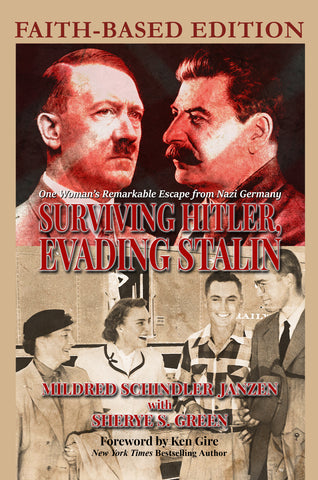 Surviving Hitler, Evading Stalin - Faith-Based EditionFAITH-BASED EDITION One Woman’s Remarkable Esca...FAITH-BASED EDITION One Woman’s Remarkable Escape from Nazi Germany The peaceful farm life of a teenage girl in Germany is abruptly upended when WWII comes knocking at her family’s door. One month...
 -
 God's Truth to Youth in a World Full of Lies and DeceptionThink of this book as a GPS. A spiritual atlas...Think of this book as a GPS. A spiritual atlas to help you navigate the maze of life and be a joyful, peaceful, prosperous, and godly person. Follow God’s Path to Success and be an example to your...
 -
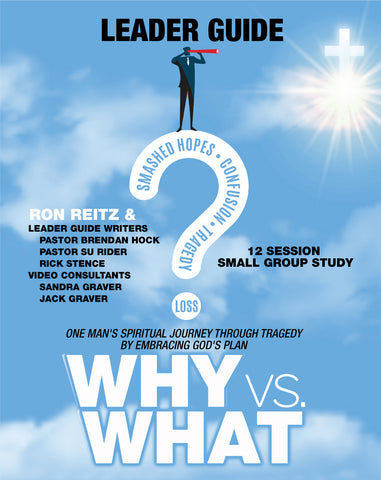 Why vs What Leader GuideOne Man's Spiritual Journey Through Tragedy by ...One Man's Spiritual Journey Through Tragedy by Embracing God's Plan The disciples asked Jesus about the blind man. i.e. “who sinned, this man or his parents, thus resulting in him being born blind...
 -
 New NewAbandon Not My SoulThe Timothy House Chronicles: Book One Abbie Ri...The Timothy House Chronicles: Book One Abbie Richardson and Keith Haliday have suffered devastating losses. Both share a common link—Abbie’s dead husband, Joe. Four years after his death, Abbie sti...
 -
 The Great Endtime RevivalThe Great Endtime Revival is a true story about...The Great Endtime Revival is a true story about a boy who had a couple highly influential spiritual experiences at a very young age that indelibly changed his life. Later, he lost his kid sister to...
 -
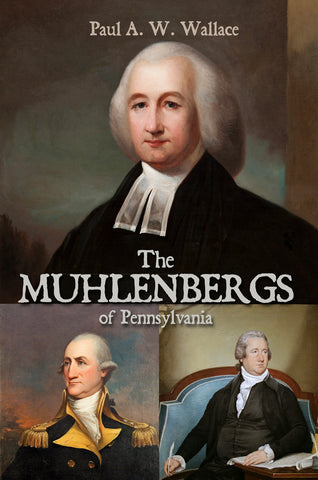 NewThe Muhlenbergs of PennsylvaniaAs a follow-up to his lengthy biography of Conr...As a follow-up to his lengthy biography of Conrad Weiser, Paul A. W. Wallace narrates the impacts of the prominent Muhlenberg family from Pennsylvania. Henry Melchior Muhlenberg, the founder of the...
 -
 The Mouse with the Broken TailJoin Sam the mouse as he leads his mouse tribe ...Join Sam the mouse as he leads his mouse tribe from the dangers inside the house to the promised land Outside. Will they finally escape Faro the cat? Will they finally be free? Along the way, the g...
 -
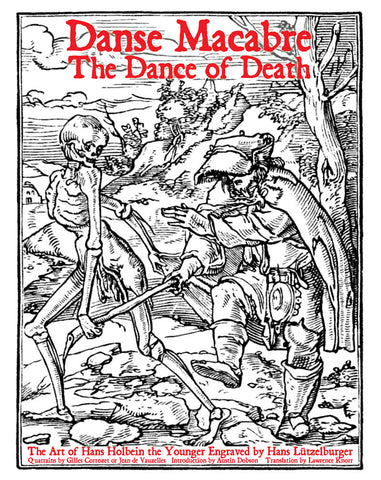 NewDanse Macabre: The Dance of DeathThe Dance of Death has appeared in many edition...The Dance of Death has appeared in many editions and forms over the centuries. This newly edited version includes 49 woodcuts based on paintings by Hans Holbein the Younger. The carver is believed ...
 -
 Why Vs WhatOne Man's Spiritual Journey Through Tragedy by ...One Man's Spiritual Journey Through Tragedy by Embracing God's Plan The disciples asked Jesus about the blind man. i.e. “who sinned, this man or his parents, thus resulting in him being born blind...
 -
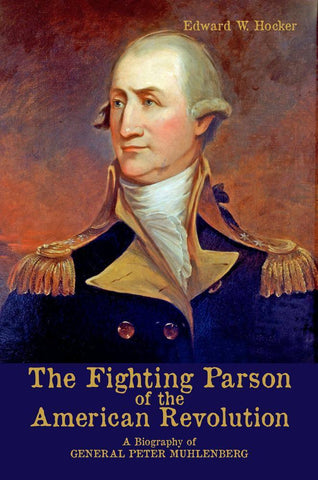 The Fighting Parson of the American Revolution: A Biography of General Peter Muhlenberg 2nd Ed.by Edward Hocker A Biography of General Peter M...by Edward Hocker A Biography of General Peter Muhlenberg, 2nd Edition Major General Peter Muhlenberg, born in Trappe, Pennsylvania, near Philadelphia, was one of the more effective military leader...
 -
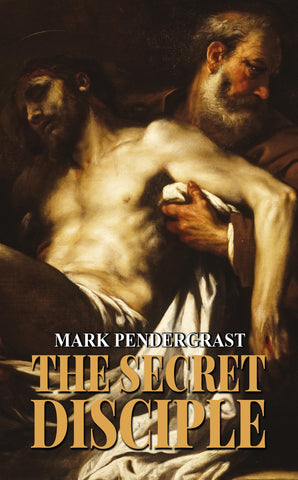 The Secret Discipleby Mark Pendergrast There met him out of the to...by Mark Pendergrast There met him out of the tombs a man with an unclean spirit, who lived among the tombs; and no one could bind him anymore, even with a chain…. And Jesus asked him, "What is your...
 -
 Mere Catholicism: Faith in the Third MillenniumIn Mere Catholicism, Daniel Agatino bridges t...In Mere Catholicism, Daniel Agatino bridges the gap between reason and revelation, offering a profound exploration of Catholic faith tailored for the challenges and complexities of the third mill...
 -
 Beagle Tales Christmasby Bob Ford This collection of Ford’s holiday s...by Bob Ford This collection of Ford’s holiday stories covers the gamut of Christmas traditions. As a pastor, he reflects on the spiritual meaning of Christmas and Epiphany. He provides humorous int...
 -
 Jonathan's Rainbowby E J Benner A single mother recounts the tria...by E J Benner A single mother recounts the trials, travails, and joys of raising her son with Down syndrome from birth to young adulthood. Always an advocate for him, she challenged the schools and...
 -
 Beagle Tales 7by Bob Ford In Ford’s seventh collection of out...by Bob Ford In Ford’s seventh collection of outdoor humor he continues to strike a chord with hunters and dog lovers as he makes observations about contemporary life, often through nostalgic narrat...
 -
 Beagle Tales 9by Bob Ford Beagle Tales 9 is another collectio...by Bob Ford Beagle Tales 9 is another collection of Ford’s writing that utilizes humor, faith, and nostalgia to weave narratives that are sure to bring a chuckle at one story and a tear at another....
 -
 A Short Seasonby Gronsky & Bohner Faith, Family, and a Bo...by Gronsky & Bohner Faith, Family, and a Boy's Love for Baseball No parent is ever ready for a terminal diagnosis of their child. No mother should see the day where turning off your son's ven...
 -
 Beagle Tales 6by Bob Ford In Ford’s sixth collection of outdo...by Bob Ford In Ford’s sixth collection of outdoor humor he continues to strike a chord with hunters and dog lovers as he makes observations about contemporary life, often through nostalgic narrativ...
 -
 What Do You Say?by James Campbell THE RETURN OF A CLASSIC! Lear...by James Campbell THE RETURN OF A CLASSIC! Learning to Listen for Grace Among Our Elders This is the 25th anniversary edition of What Do You Say? Its first publishing necessitated further printing....
 -
 Beagle Tales 5by Bob Ford This fifth installment of Ford's sh...by Bob Ford This fifth installment of Ford's short stories mixes a love for the hunt and a thorough appreciation of the beagle as a cherished pet. Whether he is navigating the wild lands looking fo...
 -
 The Chairby James A Campbell Sometimes, one needs a spec...by James A Campbell Sometimes, one needs a special mentor to find life and its wonder. Sometimes, that mentor is a chair. “The Chair is Pastor James Campbell’s spiritual odyssey that leads us throu...
 -
 Beagle Tales 4by Bob Ford This fourth installment of Ford's s...by Bob Ford This fourth installment of Ford's short stories mixes a love for the hunt and a thorough appreciation of the beagle as a cherished pet. Whether he is navigating the wild lands looking f...
 -
 Beagle Tales 3by Bob Ford This third installment of Ford's sh...by Bob Ford This third installment of Ford's short stories mixes a love for the hunt and a thorough appreciation of the beagle as a cherished pet. Whether he is navigating the wild lands looking fo...
 -
 Beagle Tales 2by Bob FordWitty wisdom gleaned from many early...by Bob FordWitty wisdom gleaned from many early mornings with gun in hand, dogs at his side, quietly and contemplatively awaiting his quarry..." The Publisher Book 2 of Bob Ford's series. Alexis Mo...
 -
 Behind Barbed Wire and High Fencesby Helen Frances Buehl Angeny "Church of the B...by Helen Frances Buehl Angeny "Church of the Brethren missionaries trapped in a Japanese concentration camp..." The Publisher For three years, a Japanese concentration camp in the Philippines was ...
 -
 The Holiness of Waterby James A Campbell"James A Campbell's treatise...by James A Campbell"James A Campbell's treatise on the significance of water in the Christian faith, past and present, in metaphor and natural wonder, brings new meaning and appreciation to the pra...
 -
 Beagle Tales 1by Bob Ford"Witty wisdom gleaned from many earl...by Bob Ford"Witty wisdom gleaned from many early mornings with gun in hand, dogs at his side, quietly and contemplatively awaiting his quarry..." The Publisher This book appeals to the following r...


