

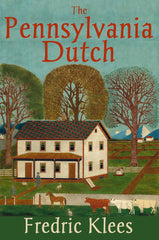
The Pennsylvania Dutch
Fredric Klees
Non-Fiction
Explore the fascinating, multi-layered world of the Pennsylvania Dutch, where Fredric Klees masterfully uncovers the unique history, distinct religious sects, and vibrant folkways that shaped this enduring American culture. The Pennsylvania...
Out of stock
9781934597927
Explore the fascinating, multi-layered world of the Pennsylvania Dutch, where Fredric Klees masterfully uncovers the unique history, distinct religious sects, and vibrant folkways that shaped this enduring American culture.
The Pennsylvania Dutch by Fredric Klees offers a deep dive into an enduring American subculture through the following key points:
- Definitive Cultural Authority: The text provides a comprehensive exploration of the Pennsylvania Dutch, positioning them as a unique "island of Rhenish civilization" that successfully preserved its individuality while other non-English groups were assimilated.
- The "Three Paths" Narrative: It strategically categorizes the culture into three distinct religious and social patterns—the "plain people" (Amish, Mennonites, Brethren), the "church people" (Lutheran and Reformed), and the Moravians—challenging the misconception that the culture is defined solely by the picturesque "plain" sects.
- Correction of Popular Myths: A significant selling point is the author's intent to "scotch" widespread folklore and "weird beliefs," such as the blue gate legend or the idea that barn signs are intended to scare witches, replacing these fabrications with intimate, factual knowledge.
- Highlighting Historical Impact: The book emphasizes the group's critical contributions to the American identity, including their roles in agriculture (the "fat earth"), industry (forge and mill), and the development of iconic American artifacts like the log cabin, the Kentucky rifle, and the covered wagon.
- Celebration of "Folkways" and the Arts: Beyond history, the work markets the sensory and aesthetic appeal of the culture, from the "crazy-clean housewife" and "apple tarts" to the intricate details of folk art, dialect, and the "Swan Song" of their unique architecture and furniture.
In The Pennsylvania Dutch, Fredric Klees invites readers into an evocative and detailed exploration of a society that remained an "island of Rhenish civilization" amidst an English sea. Far from being a monolith, Klees reveals a culture defined by three distinct religious paths: the picturesque and unworldly "plain people," the sophisticated and music-loving Moravians, and the "church people," whose traditions formed the dominant narrative of the region.
Klees moves beyond simple descriptions to analyze how these groups successfully resisted assimilation for over two centuries, preserving a unique dialect, distinct architecture, and vibrant folkways. The book provides an intimate look at daily life—from the meticulous cleanliness of the "crazy-clean housewife" to the legendary abundance of the Pennsylvania Dutch table—while simultaneously correcting long-standing myths about blue gates and "hex" signs.
More than just a cultural study, this work highlights the profound impact of the Pennsylvania Dutch on the American identity. Klees demonstrates how their mastery of agriculture and industry birthed iconic American artifacts like the log cabin, the Kentucky rifle, and the Conestoga wagon. By synthesizing history, religion, and the arts, The Pennsylvania Dutch offers a multi-layered analysis of a people whose commitment to religious freedom and equality remains a cornerstone of American democracy.
by Fredric Klees
Page Count: 378
Trim Size: 6 x 9
Publish Date: February 23, 2023
Imprint: Distelfink
Genre: History
HISTORY / United States / State & Local / Middle Atlantic (DC, DE, MD, NJ, NY, PA)
SOCIAL SCIENCE / Ethnic Studies / General
HISTORY / Social History
You might also like ...
-
 Surviving Hitler, Evading StalinOne Woman’s Remarkable Escape from Nazi Germany...One Woman’s Remarkable Escape from Nazi Germany The peaceful farm life of a teenage girl in Germany is abruptly upended when WWII comes knocking at her family’s door. One month before her sixteent...
 -
 American RouletteOne unremarkable Friday in April, a stream of o...One unremarkable Friday in April, a stream of ordinary people make their way to Liberty Mall in Anywhere, USA, to shop, work, keep appointments, or catch a movie. A typical day in an average town. ...
 -
 Final TouchstonesFinal Touchstones tells the story of four broth...Final Touchstones tells the story of four brothers leaving Sicily for America in the early 1900s. The author’s maternal grandfather is the seminal figure from age three through his later emigration...
 -
 NewPennsylvania Mountain Landmarks Volume 1This volume, and subsequent volumes, include ac...This volume, and subsequent volumes, include accounts of the author’s explorations of little-traveled byways and remote hilltops in the mountains of Pennsylvania. His descriptions and photos of th...
 -
 NewSea Captains of Cape CodEach Town’s Contribution to Maritime History Wh...Each Town’s Contribution to Maritime History Whether you call Cape Cod a man-made island or describe it as a geographic peninsula connected to the mainland by bridges, there is one non-debatable fa...
 -
 Letters from LeoMeet Leo…. A dog full of kindness, wisdom, and ...Meet Leo…. A dog full of kindness, wisdom, and helpful advice. Letters to Leo is a story made up of friendly letters between Leo and kids who are dealing with difficult situations. Leo responds to ...
 -
 Surviving Hitler, Evading Stalin - Faith-Based EditionFAITH-BASED EDITION One Woman’s Remarkable Esca...FAITH-BASED EDITION One Woman’s Remarkable Escape from Nazi Germany The peaceful farm life of a teenage girl in Germany is abruptly upended when WWII comes knocking at her family’s door. One month...
 -
 NewShades of BrownThe Official Biography of Jane Elliott and the ...The Official Biography of Jane Elliott and the Blue Eyes, Brown Eyes Exercise What if, by eight years old, children could possess the mechanism to disrupt prejudicial tendencies? That is an argumen...
 -
 Bigger PeteConversations Between Life and Afterlife Alzhei...Conversations Between Life and Afterlife Alzheimer’s Disease causes Pete to lose the ability to speak and understand others. So how is his sister talking to him? When Pete was asleep, Elizabeth wa...
 -
NewPennsylvania Mountain Landmarks Volume 1 (ePub)This volume, and subsequent volumes, include ac...This volume, and subsequent volumes, include accounts of the author’s explorations of little-traveled byways and remote hilltops in the mountains of Pennsylvania. His descriptions and photos of th...
-
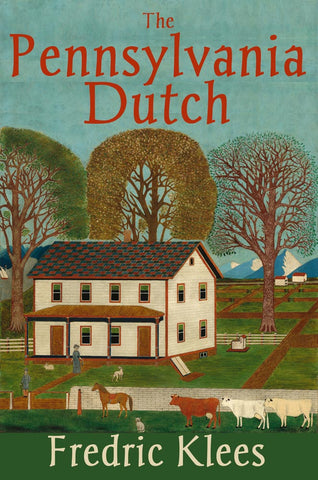 The Pennsylvania Dutch (epub)Fredric Klees' The Pennsylvania Dutch is the be...Fredric Klees' The Pennsylvania Dutch is the best and most inclusive volume with an over-all approach to its subject. "I have tried," he says, "to make this book a comprehensive treatment of the Pe...
